
CRM Strategy for Enterprise: Beyond Sales Pipelines
Managing customer relationships in large companies was never easy, and now it feels even harder. Before, it was mostly about deals and sales. Now there is much more going on. Different teams work with the same customers. Information is scattered. Sometimes it’s unclear what is happening or who is responsible.
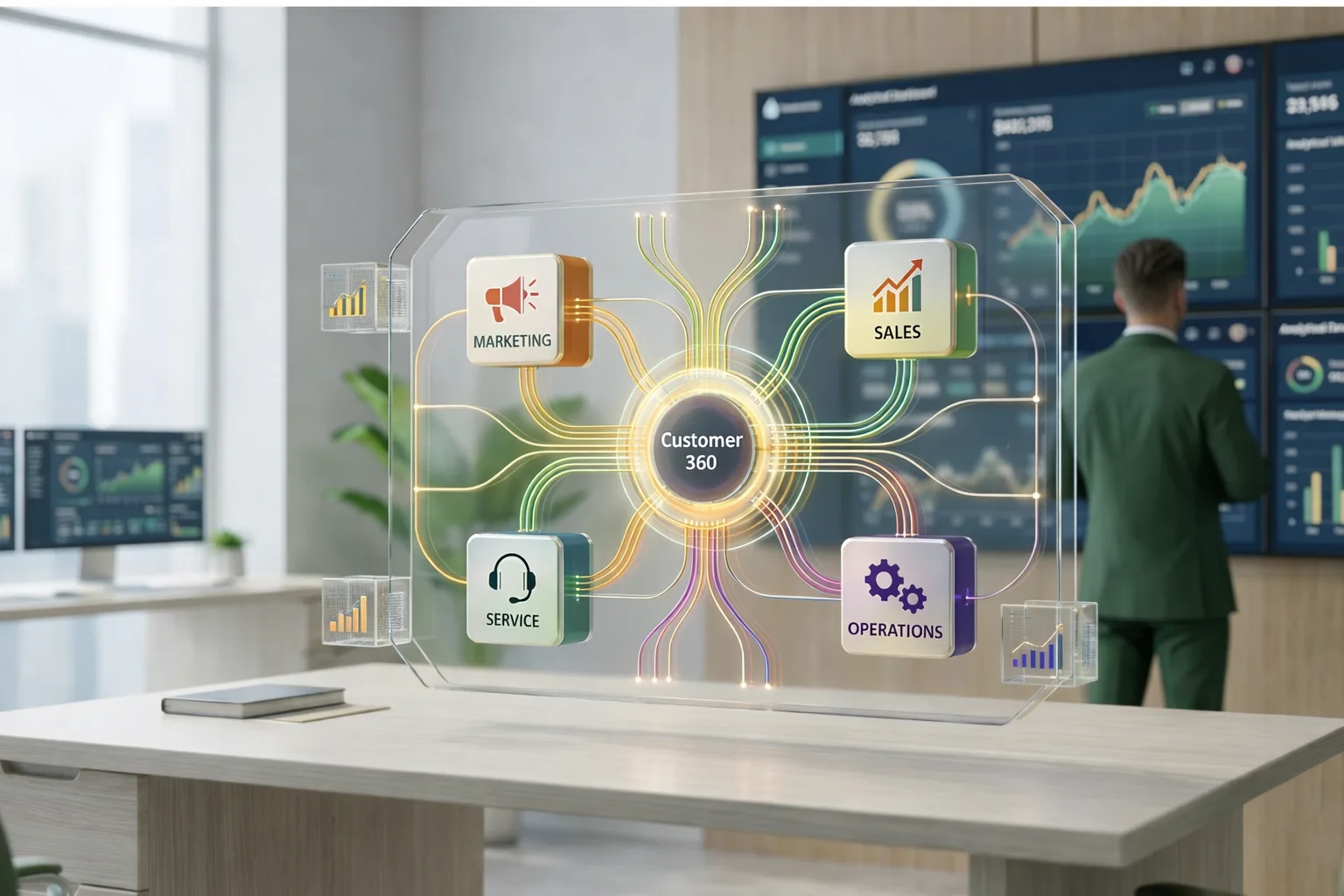
The CRM strategy is not only about tracking sales. It helps keep customer information, team activity, and communication in one place. This makes it easier to work with customers and understand what is happening.
Enterprise companies must coordinate marketing, sales, service, finance, and operational teams. Without a structured approach, customer data becomes fragmented, workflows slow down, and opportunities are lost. A comprehensive CRM strategy helps organize customer-related processes and supports them with technology that can handle company growth.
What Enterprise CRM Strategy Really Means
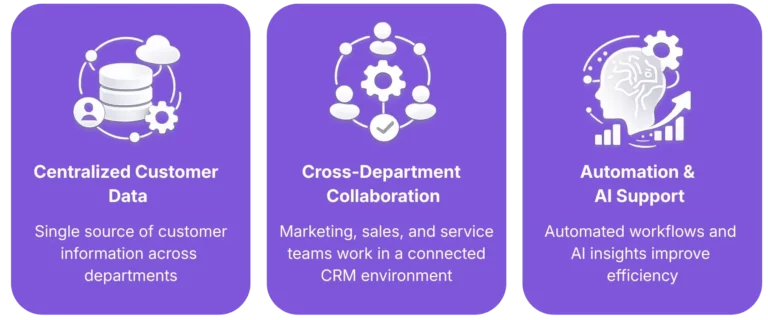
Enterprise CRM strategy is a roadmap of how the organization is going to interact with customers using structured processes, centralized data, and automation. It is created to integrate technology and business in business processes to achieve better results and make sure all relationships in the company are going to be strong. In contrast to basic CRM implementations that are centered around sales tracking, enterprise strategies cover marketing automation, service management, customer experience optimization, and operational coordination.
The goal is to create a connected environment where customer data is accessible, reliable, and actionable. This allows teams to respond faster, personalize communication, and improve service quality. CRM becomes not just a database but a strategic platform that supports business growth.
Another thing about the enterprise CRM strategy is that it must be easy to adapt. Organizations can grow in size, and they should be able to adjust their working processes when they introduce new services or enter new markets. The adaptive CRM foundation allows these changes to be implemented without disrupting operations.
Why Sales Pipelines Are Not Enough for Modern Organizations
Certain components of CRM are considered the most important ones, and while sales pipelines are one of them, they represent only part of the overall customer experience with the company. Enterprise organizations must handle complex interactions that extend beyond initial sales. Customers expect consistent experiences across marketing campaigns, sales interactions, onboarding processes, and ongoing service.
It was never a good idea to limit CRM to sales pipeline tracking because of how it impacts the visibility and coordination. Marketing teams may operate independently from sales, while service teams may not get customer context. This fragmentation leads to inefficiencies and inconsistent customer experiences.
The modern CRM strategy should work with automation, analytics, and cross-department collaboration. Take marketing automation tools as an example – they help generate qualified leads, while service automation makes response times faster. Data analytics provides insights into customer behavior, allowing organizations to make sure users are not going to leave the platform anytime soon.
Worth noting that enterprise CRM platforms have built-in artificial intelligence capabilities to get rid of tasks that can be automated and previously only took unnecessary time from specialists. They help organizations scale operations while maintaining high service quality with AI-native CRM.

Building a Holistic Customer Relationship Strategy
A customer relationship strategy is important for companies that want to manage the entire lifecycle of customer interactions. Processes are sorted by departments, and it helps to make sure all teams work with the same data and goals. This is an important part of collaboration as it reduces the need for manual work and makes customers more satisfied with the overall performance of the company. It works as an alternative to isolated tools and disconnected working processes. Every customer interaction should be visible, traceable, and actionable.
This strategy works with all stages of the customer journey, from initial awareness and lead acquisition to onboarding, service delivery, and long-term relationship management. By connecting these stages within a single CRM ecosystem, organizations eliminate information gaps and reduce the risk of miscommunication. Teams can quickly access relevant customer history, understand context, and deliver consistent experiences regardless of the channel or department involved.
The holistic approach consists of a couple key elements:
Centralized data management.
Working processes automation.
Analytics.
Integration with other business systems.
CRM platforms represent a core connection layer between different tools and processes. This is important to make sure that the customer information is not scattered across multiple systems but consolidated into a single source of truth. As a result, teams can rely on accurate data when making decisions, planning activities, and responding to customer needs.
Standardization is important as well. Enterprise organizations work with complex working processes, including approvals, escalations, and coordination between departments. CRM platforms help define and automate these workflows, providing consistency and making delays a thing of the past. Automated notifications, task assignments, and status updates help teams stay on the same page. Teams do not need to coordinate everything manually.

Modern enterprise solutions, such as the Creatio AI CRM we work with, support this approach by combining CRM functionality, workflow automation, and AI capabilities in a unified environment. As an official integrator, here at BanzaIT, we help organizations implement and customize the Creatio platform to align with business goals and operational requirements. Because of that, CRM is not just deployed but fully integrated into enterprise workflows. We work with clients to understand how their processes currently work, set up automation, and connect the system with the tools they already use. This helps them start using the platform faster and get practical results with AI-powered CRM.
With the right management, CRM platforms simplify processes with automation, with the main tasks being lead management, service requests, approvals, and reporting. In other words, it creates conditions where teams can prioritize what they should do on their own and what can be done automatically by dedicated software. With this approach, companies can avoid situations where expected results are not delivered simply because teams cannot accurately estimate how long their work will take. It has become a fundamental part of operational control for any company aiming to scale. Creatio is an agentic CRM and no-code workflow automation platform.
Artificial intelligence that is implemented in the CRM improves productivity in different ways:
- Providing recommendations.
- Identifying trends.
- Supporting decision-making.
All of that helps teams in prioritizing opportunities, detecting potential risks, and optimizing customer enlargement strategies. When companies get AI and automation tools, they demonstrate much better performance with clear adaptability.
In reality, where companies should be aware of hundreds, if not thousands, of competitors, they need an instrument that is going to help them gather as much information on what the core audience wants, how they interact with the platform, and how quickly they can get what they want.
This is a big part of modern business planning, which is centered around full statistics gathered during real-life tests. It all helps organizations to become more transparent about what they are providing in terms of user experience.

CRM Strategy Example for Enterprise-Level Companies
The most realistic CRM strategy example for large organizations involves integrating the platform in various departments to create a unified customer management system. Advertising teams need good statistics, especially on engagement, while sales teams want to monitor opportunities and forecast results.
A centralized system is where interactions are recorded, and they are needed for a detailed view of each customer’s preferences. The automated system takes tasks and distributes them so that everything works perfectly and they are all completed on time. And all this, in modern conditions, no longer even requires manual intervention from operators.
Enterprise companies integrate CRM with other systems such as ERP, communication tools, and analytics platforms. This is the way for data consistency and a single path for the company’s development.
We help companies set up CRM from start to finish. This includes consulting, system setup, integrations, and ongoing support from our team. The goal is to make sure the CRM actually fits how the company works and brings real, practical results.
Key Benefits of a Mature CRM Strategy
A mature CRM strategy gives normal, practical benefits to the company. It helps people stop wasting time looking for information and doing the same things over and over. Everything is in one place, so it is easier to understand what’s going on with customers. Enterprise CRM systems also make it easier to grow, because things don’t fall apart when the workload increases.
Key benefits include:
- Customer data is in one place instead of being scattered.
- Some repetitive tasks can run automatically.
- Teams do not have to constantly ask each other for updates.
- It is easier to see what’s actually happening, not guess.
- Customer communication becomes more consistent.
- Less manual work in daily tasks.
- The system can handle more customers as the company grows.
This does not magically fix everything, but it removes a lot of everyday chaos. CRM becomes just a normal working tool that helps keep things under control.

Best Practices for Scaling CRM Strategy Across Departments
Scaling CRM strategy across enterprise departments takes planning, but it also takes adjustments over time. It is not enough to just deploy the system and expect everything to work immediately. Organizations need to make sure CRM supports their actual business goals and does not create additional complexity for teams.
CRM should follow existing workflows instead of forcing teams to completely change how they work. Enterprise environments have different departments with different responsibilities, and the system must be flexible enough to support these differences. Customization plays an important role here, as companies often need to adapt CRM to match internal processes.
Integration with other systems cannot be ignored. CRM does not operate solely, as companies communicate with the help of dedicated platforms, use analytics tools, and operational systems daily. Without integration, data becomes fragmented, and employees need to switch between systems to get a complete picture.
Automation reduces the need for real people to work and makes every process more consistent. It is hard to imagine a task that cannot be automated in modern reality, because lead assignment, notifications, status updates – all of them can be handed to a dedicated platform. Because of that, the number of delays is lowering, and teams can focus on more important responsibilities within the company. Current models of artificial intelligence support decision-making by analyzing the information and providing recommendations.
We solve the common problems companies face with CRM implementations. And we make IT easy. As a Creatio agentic CRM integration partner, we can work with the existing tools of the system and adapt them to current operational and business needs.