
CRM for Financial Services: How Creatio Supports Complex Banking Processes
Banks today manage increasingly complex operations that extend far beyond customer relationship management. Customer onboarding, lending, compliance, service, and internal approvals often involve multiple systems, departments, and manual workflows that slow execution and increase operational costs. This article explores how Creatio helps financial institutions automate end-to-end banking processes, connect fragmented operations, and build a unified CRM environment that improves efficiency, agility, and customer experience.


What is CRM for financial services?
A CRM for financial services is a platform that automates and orchestrates banking processes across the entire customer lifecycle. Rather than serving as a system for managing contacts, a modern CRM connects customer onboarding, lending, compliance, case management, and customer service within a unified operational environment. This approach enables financial institutions to streamline execution, improve collaboration across departments, and deliver faster, more consistent customer experiences.
Why traditional CRM systems struggle in modern banking
A traditional banking CRM often struggles to support modern financial institutions because it was designed primarily for customer relationship management rather than complex operational execution. Many legacy financial CRM software solutions lack the flexibility to orchestrate end-to-end banking workflows, integrate multiple business systems, and adapt quickly to evolving regulatory and operational requirements.
The most common challenges include:
- fragmented customer and operational data stored across multiple systems;
- manual coordination between front-office, back-office, risk, and compliance teams;
- disconnected customer onboarding, lending, and service processes;
- limited visibility into approvals, case progress, and operational bottlenecks;
- reliance on email, spreadsheets, and legacy applications for daily operations;
- slow adaptation to regulatory changes and evolving business requirements.
Insight: Modern banks require more than a customer database. They need a platform that orchestrates end-to-end banking processes, connects systems and teams, and enables continuous process optimization without increasing operational complexity.

Key banking processes that require automation
A modern CRM for financial institutions should automate business-critical processes rather than individual tasks. From customer onboarding and lending to compliance, case management, and customer service, workflow automation helps banks reduce manual effort, improve operational visibility, and deliver faster, more consistent experiences across every stage of the customer journey.
Customer lifecycle management
A modern banking CRM system should support every stage of the customer lifecycle, from onboarding and account opening to ongoing service and relationship development. Automating these processes helps banks eliminate repetitive tasks, maintain a 360-degree customer view, deliver personalized interactions, and ensure every request is processed consistently across all channels.
Credit and lending operations
Loan origination involves multiple stages, including application processing, document verification, credit assessment, approvals, and customer communication. Workflow automation accelerates each step, reduces manual intervention, improves decision consistency, and enables banks to process lending requests faster while maintaining full visibility into every application.
Compliance and risk management
Banks operate in a highly regulated environment where compliance failures can lead to financial penalties and reputational risks. Automated compliance workflows help standardize KYC, AML, document verification, audit trails, and regulatory reporting while reducing manual errors and enabling faster responses to changing regulatory requirements.
Internal approvals and case management
Many banking operations depend on approvals involving multiple departments, including risk, legal, operations, and customer service. Automated routing, predefined approval rules, and centralized case management reduce processing delays, improve transparency, and ensure every request is tracked from initiation to resolution.
Omnichannel customer service
Customers expect to communicate with their bank through their preferred channel while receiving consistent service regardless of how they make contact. Centralizing interactions across phone, email, chat, messaging apps, and online portals enables service teams to respond faster, maintain complete interaction histories, and resolve requests more efficiently.
Sales and relationship management
A modern financial CRM enables relationship managers to access customer insights, interaction history, product portfolios, and sales opportunities from a single environment. Automating sales processes helps prioritize opportunities, coordinate customer engagement, streamline follow-ups, and strengthen long-term relationships while improving overall sales performance.
How Creatio supports complex banking operations
Creatio CRM is an agentic CRM and no-code workflow automation platform designed to automate and orchestrate complex banking processes within a unified operational environment. Instead of supporting isolated functions, the platform connects customer-facing and back-office operations, enabling banks to improve execution speed, operational visibility, and process consistency.
Creatio supports complex banking operations through:
- automating customer onboarding, account opening, and KYC processes;
- streamlining loan origination, credit approvals, and document processing;
- orchestrating compliance workflows, audit trails, and regulatory reporting;
- managing internal approvals and case routing across multiple departments;
- centralizing omnichannel customer interactions and service requests;
- integrating CRM with core banking, ERP, document management, and third-party systems;
- enabling no-code process customization that allows banks to adapt workflows without extensive development.
Insight: Modern banking requires more than workflow automation. By combining AI, no-code capabilities, and process orchestration within a single platform, Creatio enables financial institutions to modernize operations while maintaining the flexibility to adapt to changing business and regulatory demands.

Real examples of banking automation with Creatio
The value of banking automation becomes clear when implemented in real banking environments. The following examples demonstrate how financial institutions use Creatio to streamline complex operations, unify fragmented systems, and achieve measurable improvements in efficiency, customer service, and operational performance.
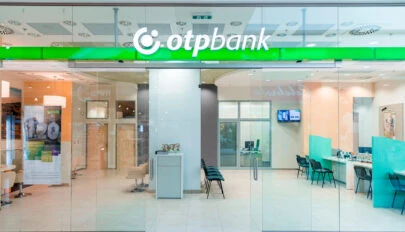
OTP Bank: Unifying internal and customer-facing banking operations
The OTP Bank case demonstrates how a unified digital ecosystem can streamline both internal operations and customer-facing banking services. To replace fragmented systems and improve operational efficiency, the bank implemented a corporate portal integrated with Creatio, creating a unified environment for managing business processes across departments.
Within Creatio, the project included the development of an employee self-service portal, product catalog management, corporate lending process automation, document management automation, and analytics for evaluating the performance of managers and departments. Integration with Creatio enabled seamless data exchange, automated application routing, and eliminated the need for manual data transfer between systems.
The project delivered measurable business results:
- automation of seven core business processes;
- 59% faster application verification;
- 72% reduction in document processing time;
- a unified digital workspace for more than 700 employees.
Business impact: By consolidating internal and customer-facing operations into a connected digital ecosystem, OTP Bank reduced manual work, accelerated business processes, and established a scalable foundation for future digital transformation.
Kyrgyzkommertsbank: Building a centralized omnichannel contact center
The Kyrgyzkommertsbank case demonstrates how a centralized contact center can improve customer service quality while simplifying communication management across the bank. To support growing customer demand, the bank implemented an omnichannel contact center integrated with key banking services, enabling agents to manage customer interactions through a single interface.
The solution integrated customer data, inbound and outbound calls, messaging channels, automated notifications, and customer service workflows into one environment. Agents gained real-time access to customer information, while supervisors could monitor workloads, track performance, and manage service operations more effectively.
The implementation delivered measurable operational improvements:
- 85–90% inbound call response rate;
- 10-minute chat response time;
- zero missed customer messages;
- centralized customer communication across multiple channels;
- improved process transparency and operational control.
Business impact: By consolidating customer communication and service operations into a unified platform, Kyrgyzkommertsbank improved response times, strengthened operational visibility, and created a more consistent customer experience across all service channels.
Benefits of using Creatio CRM for banks
Modern CRM software for financial services should support far more than customer relationship management. By automating banking workflows and connecting customer-facing and back-office operations, Creatio for banks helps financial institutions improve efficiency, increase operational visibility, and adapt faster to changing business and regulatory requirements.
Key business benefits include:
- faster customer onboarding and loan processing through workflow automation;
- improved operational efficiency by eliminating manual and repetitive tasks;
- centralized visibility into customer interactions, approvals, and business processes;
- enhanced compliance with standardized workflows, audit trails, and process controls;
- greater flexibility to adapt workflows and introduce new banking services using no-code tools;
- seamless integration with core banking systems and third-party applications;
- improved collaboration between sales, operations, risk, compliance, and customer service teams.
Insight: The greatest value of modern banking platforms lies not in replacing individual systems, but in connecting people, data, and processes into a single operational environment that enables banks to scale efficiently and respond faster to changing business demands.

Why financial institutions are moving toward agentic CRM
As banking operations continue to grow in complexity, traditional automation is no longer sufficient to support fast decision-making and coordinated execution. Financial institutions increasingly adopt agentic CRM to automate not only repetitive tasks, but also workflow orchestration, intelligent decision support, and cross-functional collaboration across the organization.
The key drivers behind this shift include:
- increasing regulatory requirements and compliance complexity;
- growing demand for faster customer onboarding and service delivery;
- the need to connect fragmented systems and eliminate manual coordination;
- rising customer expectations for personalized, omnichannel banking experiences;
- greater reliance on AI to support operational decisions and process execution;
- continuous pressure to improve efficiency while controlling operational costs.
Agentic CRM represents the next stage of banking automation. Instead of simply recording customer interactions, it actively coordinates workflows, supports employees with AI-driven recommendations, and enables banks to execute complex processes more efficiently across the entire organization.
Conclusion
Modern banking requires CRM platforms that go beyond customer data management to automate complex business processes, connect fragmented systems, and support intelligent decision-making across the organization. When evaluating what makes the best CRM for banks, financial institutions should prioritize, financial institutions should prioritize workflow automation, AI capabilities, no-code flexibility, and seamless integration. At Banza, we help banks implement and customize Creatio solutions that streamline complex operations, modernize legacy processes, and accelerate digital transformation through connected, intelligent workflows.