
Optimizing Banking Operations Through Workflow and Project Management Automation
Banks today face growing operational complexity. Regulatory requirements are increasing, customer expectations continue to rise, and internal teams rely on dozens of disconnected systems. As a result, operational efficiency has become a strategic priority for CIOs, COOs, and Digital Transformation leaders.
Modern business process automation is no longer about replacing paper forms or digitizing individual tasks. It is about creating connected workflows that accelerate approvals, reduce manual work, improve collaboration between departments, and provide complete visibility into operations.
This is where an AI-native CRM such as Creatio enables banks to modernize operations without lengthy development cycles. Together with implementation partners like Banza, financial institutions can automate complex operational processes, continuously improve workflows, and respond faster to changing business needs.


Why Banking Operations Are Becoming More Complex
Banking operations are becoming more complex because financial institutions must coordinate more processes, regulations, systems, and customer interactions than ever before.
Today’s banks manage hundreds of operational workflows simultaneously, including customer onboarding, lending, compliance, procurement, HR, internal service requests, document management, branch operations, and project delivery.
At the same time, organizations must balance:
- regulatory compliance;
- faster customer service;
- operational resilience;
- cost optimization;
- digital customer experiences;
- collaboration across multiple departments.
Managing these activities through emails, spreadsheets, and disconnected applications inevitably creates delays and operational bottlenecks.
This explains why banking operations automation has become a strategic investment rather than simply another IT initiative.
Common Operational Challenges Financial Institutions Face
Most banks struggle with fragmented workflows rather than individual technology problems.
Typical operational challenges include:
- manual approval chains;
- duplicated data entry;
- slow document processing;
- disconnected customer and operational systems;
- poor visibility into project progress;
- inconsistent internal service delivery;
- limited reporting across departments.
For example, a corporate lending request often requires cooperation between sales teams, risk managers, compliance specialists, legal departments, and credit committees. Without integrated business process management in banking, employees spend valuable time transferring information instead of making decisions.

What Is Workflow Automation in Banking?
Workflow automation is the foundation of efficient banking operations because it connects people, systems, approvals, and business rules into a single orchestrated process.
Workflow automation should not be viewed as another standalone technology. Instead, it acts as the operational backbone that coordinates work across the entire organization.
For example, a workflow can automatically:
- receive a customer application;
- validate submitted documents;
- assign tasks to the appropriate department;
- notify stakeholders;
- trigger approvals;
- monitor deadlines;
- record every action for auditing purposes.
Unlike simple task automation, banking workflow automation manages complete business processes from initiation to completion.
When powered by the Creatio platform, workflows can also incorporate AI agents, CRM data, and no-code process design, allowing business teams to improve operations without relying entirely on software developers.
Banking Processes That Benefit Most from Automation
The greatest value comes from automating high-volume, cross-functional banking processes.
The most common examples include:
Customer onboarding
- KYC verification
- document collection
- approval routing
- account opening
Lending operations
- application processing
- credit committee approvals
- corporate lending workflows
- document management
Internal services
- procurement requests
- HR processes
- equipment requests
- employee self-service
Financial operations
- reconciliation workflows
- payment approvals
- budgeting processes
- reporting
Compliance
- audit preparation
- regulatory documentation
- exception handling
- approval tracking
This approach transforms isolated activities into connected banking process automation, significantly improving operational transparency and execution speed.
How Workflow Automation Improves Project Management in Banks
Workflow automation gives project managers real-time visibility into execution while reducing administrative overhead.
Large banking transformation initiatives often involve multiple business units, external vendors, compliance teams, and IT departments. Without standardized workflows, project governance quickly becomes difficult.
Workflow automation improves project management by:
- assigning responsibilities automatically;
- tracking milestones in real time;
- escalating overdue tasks;
- standardizing approvals;
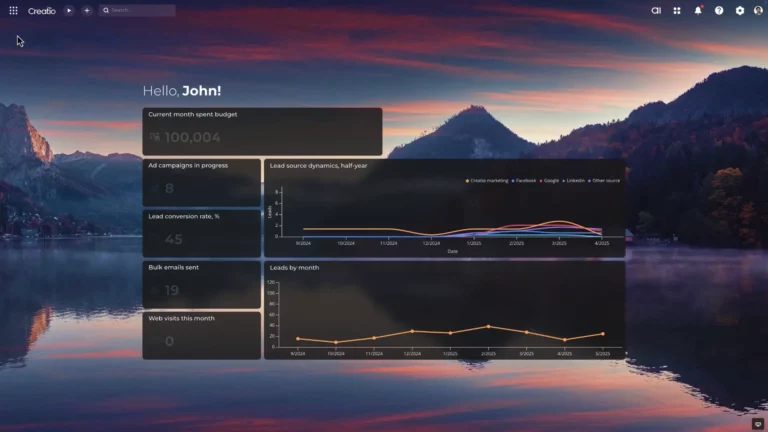
- providing management dashboards;
- documenting every project decision.
Instead of manually coordinating dozens of stakeholders, project managers can focus on strategic delivery while the workflow platform manages operational execution.
This is especially valuable during enterprise-wide digital transformation programs where several initiatives run simultaneously.
Real Banking Transformation Examples
Real-world implementations demonstrate that workflow automation delivers measurable business outcomes—not just operational improvements.
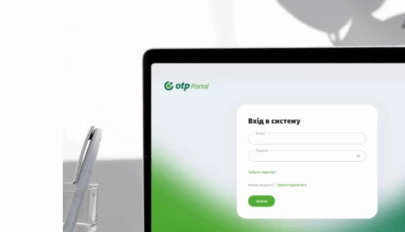
One of the strongest examples is the OTP Bank case, where Banza implemented a corporate employee portal based on the Creatio platform to centralize internal operations and automate key business processes.
Thanks to the corporate portal, the bank achieved the following results:
Result
7 automated business processesApproximately $200,000 annual savings
72% reduction in document processing time
59% faster application verification
Business Impact
Centralized operational managementLower operating costs compared with SharePoint
Faster lending and operational workflows
Improved customer service and internal efficiency
The solution covered corporate lending, document management, employee portals, product catalog management, analytics, CRM integration, and internal collaboration, while Creatio became the core automation platform across virtually all banking departments.
Another example is Banza’s Automation for a Bank in Azerbaijan, where one of the country’s leading banks automated internal operational workflows through a centralized employee portal. The solution streamlined procurement, repair management, vehicle reservations, visitor management, and employee quality control, helping reduce operational costs, shorten task completion times, and improve the overall quality of internal operations.
These projects illustrate that automation in banking extends well beyond customer-facing processes—it also transforms internal operations that directly affect efficiency and service quality.
Why No-Code Platforms Accelerate Banking Transformation
No-code automation enables banks to improve processes much faster while reducing dependency on traditional software development.
Traditional banking projects often require months of development before business users see measurable value.
With no code automation, business analysts and process owners can:
- model workflows visually;
- adjust approval rules;
- create forms;
- automate notifications;
- integrate systems;
- optimize processes continuously.
This flexibility allows financial institutions to respond much faster to regulatory changes, new products, and evolving customer expectations.
Instead of waiting for lengthy development cycles, banks can continuously improve their operations through incremental enhancements.
How Creatio Supports Workflow Automation in Banking
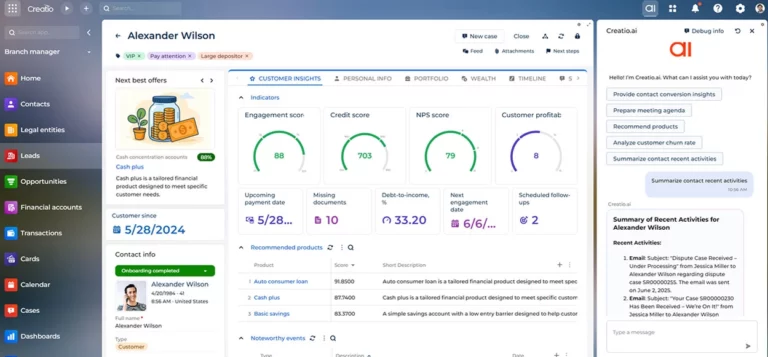
Creatio is an AI-native CRM and no-code workflow automation platform that helps financial institutions automate customer-facing and operational processes from one centralized environment.
Creatio combines CRM, workflow automation, AI capabilities, and no-code development into a single platform designed for enterprise transformation.
Its capabilities include:
- Creatio CRM for customer relationship management;
- Creatio Sales for sales automation;
- Creatio Marketing for campaign orchestration;
- Creatio Service for customer and internal service management;
- Creatio Studio for no-code application and workflow development;
- AI agents embedded directly into business processes.
As a long-term Creatio implementation partner, Banza helps banks design, implement, and continuously optimize workflow automation solutions tailored to each organization’s operational model. Our expertise spans lending, document management, internal portals, service workflows, compliance processes, and enterprise digital transformation.
Conclusion
Workflow automation is no longer a supporting technology—it has become the operational foundation of modern banking.
From lending and document processing to procurement, internal services, project management, and financial operations, intelligent workflows help banks eliminate manual work, improve collaboration, and make faster decisions.
Supported by an AI-native CRM and no-code workflow automation platform like Creatio, banks can modernize operations without increasing technical complexity. Combined with Banza’s implementation expertise and proven banking experience, organizations can build scalable automation that delivers measurable operational and financial impact.