Employee Portals: How to Improve Internal Efficiency at Scale
As organizations grow, internal operations become increasingly complex, fragmented across systems, teams, and workflows. What once worked through simple communication and manual coordination turns into delays, inefficiencies, and rising operational costs. This is where an employee portal evolves from a basic intranet into a core operational layer − enabling companies to unify processes, improve visibility, and scale internal efficiency without increasing overhead.
Why internal processes break as companies grow?
As companies scale, internal processes become harder to manage, slower to execute, and more dependent on manual coordination across teams and systems. What once worked in small teams turns into fragmented workflows, delayed approvals, and inconsistent execution at scale. The main reasons behind this breakdown:
- growing number of employees, teams, and approval layers;
- disconnected systems (HR, CRM, ServiceDesk, internal tools);
- reliance on manual communication (emails, chats, meetings);
- lack of standardized workflows across departments;
- limited visibility into tasks, responsibilities, and progress.
Insight: Internal processes don’t break because of growth itself − they break because they were never designed to scale. Most companies try to fix this by adding more tools or people, but without restructuring how work flows, complexity only increases.
What makes internal operations inefficient today?
Internal operations become inefficient when execution is fragmented across systems, teams, and manual workflows. Instead of a structured process, companies rely on emails, meetings, and individual coordination, which slows down execution and increases operational costs. Key factors that drive inefficiency:
- manual handoffs between departments (HR, IT, finance, operations);
- scattered communication across multiple tools and channels;
- lack of a single source of truth for tasks, data, and documents;
- delayed approvals and unclear ownership of responsibilities;
- high dependency on employees to track and move tasks forward.
Insight: Most inefficiencies are not visible at the system level − they happen between steps, where responsibility is unclear and processes are not standardized. This is why adding more tools rarely solves the problem, but often makes internal operations even more complex.

What is an employee portal (in practical terms)?
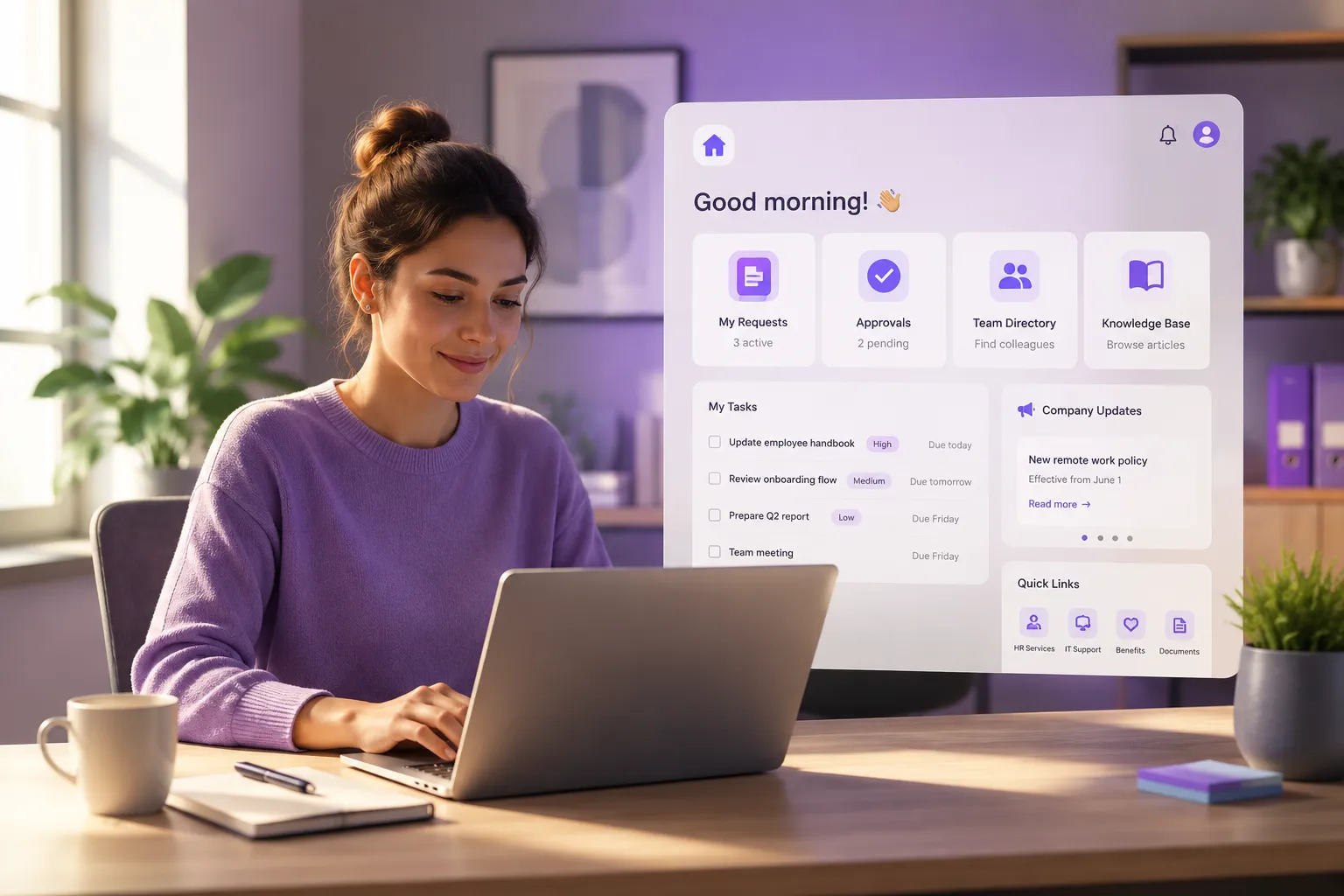
An employee portal is a centralized environment where internal processes, communication, and tasks are managed and executed in one place. In practical terms, it replaces fragmented tools and manual coordination with structured workflows, giving employees access to everything they need − from requests and approvals to documents and updates − within a single interface. As part of a modern digital workplace platform, it enables companies to standardize execution, improve visibility, and reduce operational overhead across all internal operations.
How an employee portal improves efficiency at scale?
Improving efficiency at scale is not about speeding up individual tasks − it’s about removing friction from how work moves across the organization. As operations grow, small delays in coordination, approvals, or information access turn into significant time and cost losses. A structured portal brings consistency into execution by embedding processes directly into the system. Through digital workplace automation, companies reduce manual effort, eliminate variability, and ensure operations run faster and more predictably.
Banza develops secure employee portals for enterprise environments. Our solutions help automate workflows, centralize internal services and communication, and improve operational efficiency with enterprise-grade security features.
See How Banza Automated Internal Operations at Scale
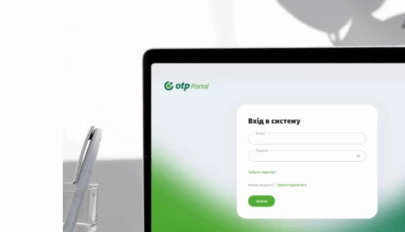
Explore our case study for one of Ukraine’s leading banks to see how Banza automated 7 internal bank processes and built a unified digital workspace
View case studyBelow are the key ways an employee portal improves efficiency at scale and drives measurable business impact.
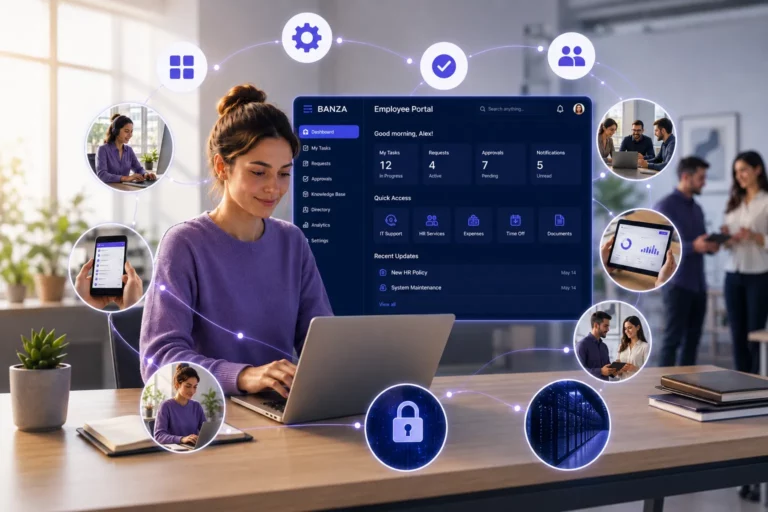
Centralized access to tools, data, and internal services
Employees lose time when they need to switch between multiple systems to complete routine tasks. A portal solves this by providing a single access point to all tools, data, and internal services, reducing context switching and simplifying daily operations. Within intranet portals for employees, this approach ensures faster task execution, fewer errors, and a more consistent user experience across the organization.
Automated internal requests and self-service workflows
Routine requests − such as HR inquiries, IT tickets, or approvals − often create unnecessary workload and delays. A self-service employee portal automates these processes, allowing employees to submit requests, track status, and receive updates without manual coordination. This reduces administrative load, shortens processing time, and allows teams to focus on higher-value tasks instead of repetitive operations.
Real-time visibility into operations and process performance
Lack of visibility makes it difficult to understand where time is lost and which processes slow down execution. A portal provides real-time insight into workloads, process status, and performance metrics, allowing managers to identify bottlenecks early and make faster decisions. As part of an employee task management system, this improves operational control, reduces delays, and ensures more predictable execution across teams.
Standardized workflows across departments and regions
Different teams often execute the same processes in different ways, leading to inconsistencies, errors, and slower onboarding. A portal standardizes workflows by defining clear steps, rules, and responsibilities across the organization. This approach, supported by modern HR portal software, ensures consistent execution, reduces errors, and makes it easier to scale processes across departments, locations, and growing teams.
Structured task execution with clear ownership and accountability
When responsibilities are unclear, tasks stall and performance becomes unpredictable. A portal enforces structured execution by assigning clear ownership, deadlines, and status tracking for every task. Within an employee management portal, this improves accountability, reduces missed handoffs, and ensures work moves forward without constant supervision, increasing overall operational efficiency.
Reduced operational load through automation of routine processes
A significant part of internal workload comes from repetitive administrative tasks that do not create business value. A portal reduces this load by automating routine processes such as approvals, notifications, and data updates. As part of employee portal development, this allows organizations to lower administrative costs, free up employee time, and redirect resources to more strategic activities.
Scalable internal operations without increasing administrative overhead
As organizations grow, internal complexity often leads to higher administrative costs and additional support roles. A portal enables scalability by embedding processes into the system, reducing the need for manual coordination and supervision. As an online employee portal, it allows companies to handle higher volumes of internal requests and operations without expanding administrative teams, improving cost efficiency and supporting sustainable growth.
What results companies get after implementation?
Implementing an employee portal changes how internal operations perform at scale, turning fragmented execution into structured and measurable processes. Key business outcomes:
- faster execution of internal requests and approvals;
- reduced operational costs by eliminating manual coordination;
- improved employee productivity and reduced time spent on routine tasks;
- higher process consistency across teams and departments;
- increased capacity to handle growth without expanding support functions.
Let’s look at a real-world example. A logistics company with 800+ employees reduced internal task resolution time by 39% after implementing a solution delivered through employee portal development by Banza. By structuring task ownership, automating workflows, and improving visibility across departments, they decreased administrative workload by 34% and significantly improved execution speed − without increasing internal operations staff.
Employee portal vs disconnected tools
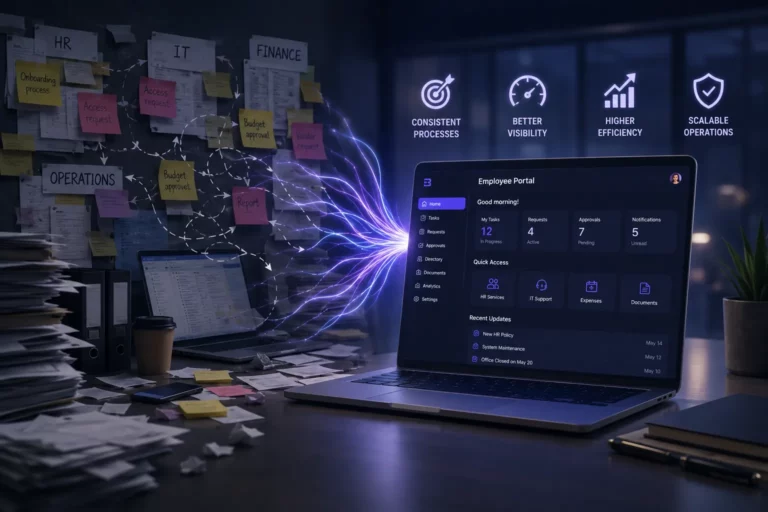
Most organizations don’t lack internal tools − they lack coordination between them. As systems grow, work becomes harder to manage, slower to execute, and more dependent on manual effort. The difference becomes clear when comparing a fragmented tool-based setup with a unified portal approach.
| Aspect | Disconnected tools | Employee portal |
| Access to systems | Multiple logins and platforms | Single access point to all tools and services |
| Task execution | Manual coordination and follow-ups | Structured workflows with automated execution |
| Communication | Scattered across email, chats, and tools | Centralized within one environment |
| Data consistency | Duplicate and outdated information | Unified, up-to-date data in one system |
| Visibility | Limited insight into tasks and processes | Real-time visibility into operations and performance |
| Process standardization | Inconsistent across teams | Standardized workflows across the organization |
| Operational efficiency | Slowed by switching and coordination | Faster execution with reduced manual effort |
| Scalability | Requires more administrative resources | Scales operations without increasing overhead |
When your company needs an employee portal?
An employee portal becomes necessary when operational complexity starts impacting execution quality, not just speed. At this stage, teams may still complete tasks, but processes become inconsistent, harder to control, and increasingly dependent on individual effort rather than structured systems.
Typical indicators include:
- different departments use their own processes for similar tasks;
- onboarding new employees takes longer due to lack of standardized workflows;
- managers spend significant time coordinating routine operations;
- internal service quality varies depending on the team or location;
- scaling operations requires adding administrative roles instead of improving processes.
Insight: Many companies recognize the need for an employee portal only when inefficiencies become visible in performance metrics. In reality, the earlier signal is loss of consistency − when the same process produces different outcomes depending on who executes it.
What to consider before building an employee portal?
Before building an employee portal, companies should focus on how internal work is executed, not just on the interface or features they want to implement. The key is to identify where processes break, where delays occur, and which tasks create the most operational load. Without clear priorities and defined business outcomes, a portal risks becoming another layer of tools rather than a system that improves execution. Successful implementation depends on aligning workflows, responsibilities, and system integrations before development begins.
How to approach employee portal development?
A successful employee portal is built around how work actually happens, not how systems are structured. The goal is to create a solution that improves execution, reduces friction, and scales with the organization. Key stages of implementation:
- Identify high-friction processes and define business priorities.
- Map current workflows and redesign them for automation and clarity.
- Integrate core systems (HR, IT, finance) into a unified environment.
- Launch with high-impact use cases and expand gradually.
- Measure performance and continuously optimize based on real usage.
With Banza, companies can approach employee portal development as a structured transformation, not just a technical project. By combining workflow automation, system integration, and a unified interface, Banza enables organizations to improve internal efficiency faster and scale operations without increasing administrative overhead.